The More Water, the Better Myth: Read the Soil First
Read soil before watering to judge whether roots need moisture, avoid needless soaking and build a routine that responds to each plant and its patch.
The most common watering mistake is following the calendar instead of checking the soil. Read the soil before watering and you are less likely to soak a bed that is already damp, or leave a plant thirsty because its usual day has not arrived.
A watering schedule can be a useful reminder to look. It is a poor substitute for looking. Rain, shade, wind, a pot’s material and a plant’s stage of growth all change how quickly moisture disappears. The soil at the surface may tell only part of the story.
Check below the surface, not just the crust
A dry-looking top layer does not always mean the roots need water. Sun and moving air can dry the surface while the soil beneath remains moist. The reverse can happen too: a brief shower may darken the top without wetting the root zone.
For a small plant, use a finger to check the soil a little way down, taking care not to disturb the roots. In a larger bed, a narrow trowel can lift a small sample from beside the plant. Feel whether it is cool and damp, merely cool, or dry and crumbly. Replace the sample afterwards; the garden does not need an excavation.
Pay attention to where you check. Soil immediately beside a stem can behave differently from soil near the edge of a root area. For established plants, check within the area their roots occupy, rather than at a convenient bare patch several steps away.
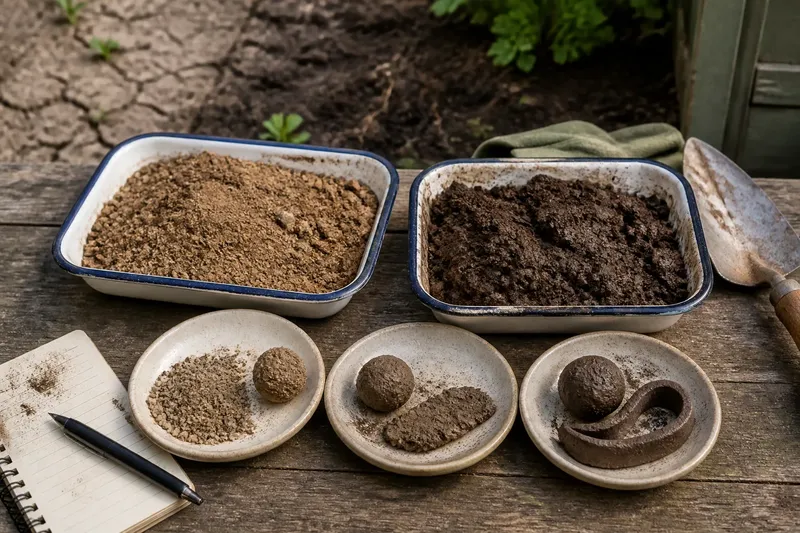
Texture affects the reading. Sandy soil can feel dry soon after water has passed through it, while heavier soil may remain damp for longer. A handful that holds together may be moist, but squeezing it hard is not a useful test of how the roots are faring. Use the feel of the soil alongside the plant’s condition and the recent weather.
Water the root area rather than the leaves
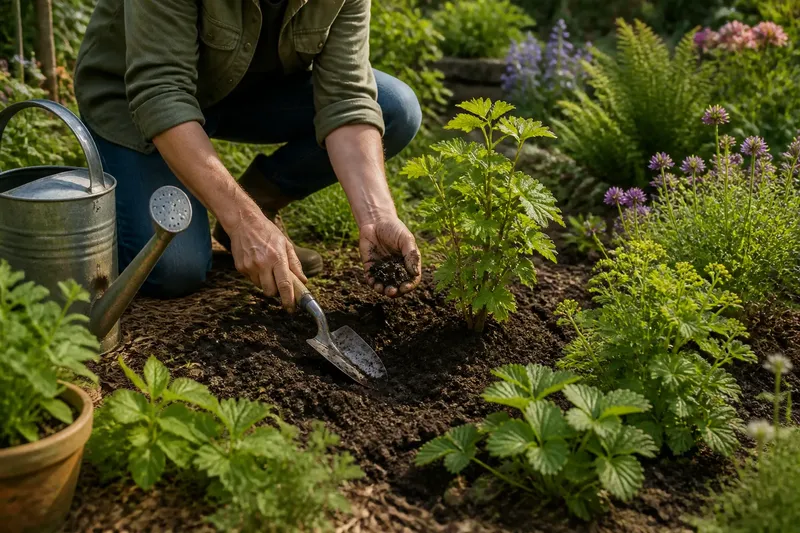
When the soil is dry where the roots are active, direct water towards the ground around the plant. A watering can with a rose can soften the flow for seedlings and newly planted growth. A hose with a gentle nozzle can suit a larger bed; keep the stream low and aimed at the soil rather than sweeping it across foliage.
Wet leaves are not a dependable measure of useful watering. Water on foliage may evaporate or run off without reaching the roots. A strong jet can also flatten seedlings, dislodge loose soil or expose roots. A controlled flow gives the soil time to take in moisture instead of sending it along the path.
Watering at the base does not mean pouring against the stem. Spread the water over the root area, leaving a little space around the crown where appropriate. For a young plant, the original root ball may dry at a different rate from the surrounding bed, so check both rather than assuming the nearby soil tells the whole story.
In a mixed border, plants may not share the same needs. A thirsty plant beside one that prefers drier conditions can make blanket watering awkward. Give attention to the individual root areas and consider whether the planting arrangement is forcing you to compromise. The watering can cannot negotiate between neighbours.
Read pots and beds as different places
Containers have less soil than a border and are exposed on several sides, so their moisture can change quickly. Check the compost beneath the surface, not merely its colour on top. A pot can also become dry enough for water to run down a gap at the edge; if the centre remains dry, a quick splash has not addressed the problem.
Drainage matters as much as moisture. A container needs a route for excess water to leave, and a saucer left full can keep the bottom of the pot persistently wet. If compost stays soggy, pause before adding more and check that the drainage holes are clear and the pot is not standing in trapped water.
Open ground has a larger volume of soil, but it is not uniform. A raised bed, a sheltered corner and a patch beneath a roof overhang can respond differently to the same shower. Check the actual bed where the plant grows. Rain falling on the path beside it is not evidence that the root area is moist.
Mulch can slow moisture loss from the surface, but it can also hide what the soil feels like. Move it aside at the point where you check, then return it after. There is little value in watering mulch until it looks impressively damp while the soil beneath remains untouched.
Let the plant add evidence
Soil is the first check, not the only one. A plant that is wilting in warm conditions may be short of water, but wilting can also accompany waterlogged roots, recent planting or heat stress. Look at the soil before reacting. Adding more to already saturated ground can make the original problem worse.
Consider the plant’s stage of growth. Newly planted specimens have a limited root area and may need closer attention while they establish. A mature plant with roots spread through the bed can draw on a broader patch of soil. Seedlings, leafy vegetables and plants in small pots can also respond differently from established shrubs, so avoid treating the whole garden as one unit.
Recent weather helps explain what you find, but it does not replace the check. A passing shower may wet leaves and leave the ground below dry. Wind can draw moisture from exposed plants, while a shaded bed may retain it. Take note of rain, sun and wind, then confirm conditions at the roots before deciding.
Say you have a newly planted currant in a sheltered bed and a warm, breezy day has followed light rain. The surface looks dark, but a small check beside the original root ball feels dry while the surrounding soil is still cool. Water the root area gently, then check again later rather than giving the whole bed another routine soaking. The expected observable result is soil that feels evenly moist around the new roots, not a puddle at the stem.
Build a routine around checks, not dates
A useful routine is a repeated observation, not a fixed instruction to water. Choose a regular moment to inspect pots and vulnerable plants, especially during spells when conditions change quickly. If the soil is still moist where roots are active, leave the watering can alone and check again later. If it is dry, water the relevant area and observe how the soil responds.
Keep brief notes if several parts of the garden behave differently. Record the plant or bed, whether the soil was dry below the surface, recent rain and what you did. The notes are not a new calendar; they help you recognise patterns, such as one container drying sooner than others or a sheltered border retaining moisture.
After watering, check the soil rather than judging by how long the tap was on. If the surface is wet but the root zone remains dry, the water may have run off or failed to penetrate. If the soil is saturated, stop and allow it to drain. The result to aim for is moisture reaching the roots without leaving the plant standing in water.
What is not worth the effort is checking every plant repeatedly through the day when the soil and weather have not changed. A sensible inspection of the areas most likely to dry out is more useful than turning the garden into a dampness surveillance operation.
Questions gardeners ask before watering?
How can I tell if a plant needs watering?
Check the soil below the surface in the plant’s root area and consider its recent conditions. A dry root zone is a clearer reason to water than a dry-looking crust or a single drooping leaf.
Should I water after rain?
Check rather than assume. Light rain may wet foliage and the top layer without reaching roots, while steady rain may leave a sheltered or well-covered patch drier than the open ground.
Is it better to water in the morning or evening?
Choose a time when you can direct water onto the soil and avoid leaving foliage wet for long periods where that is a concern for the plant. Local conditions and the plant’s needs matter more than treating one hour as a universal rule.
Why is my plant wilting when the soil is wet?
Wet soil can leave roots short of air or indicate poor drainage, so more water may not help. Check the container or bed for standing water and seek advice from a qualified horticultural professional if the cause remains unclear or the plant continues to decline.
Use labels and local guidance for particular plants
Plants differ, and advice for a seedling may not suit an established specimen. Follow the plant label or supplier’s care guidance where it gives specific watering needs, and adapt general observations to your soil and local conditions. For anything that depends on manufacturer instructions or local rules, check those once rather than relying on a broad garden rule.
Read soil before watering, then let the result guide the next check. That small pause is often enough to distinguish a plant that needs a drink from one that is merely standing beside a watering can with excellent timing.